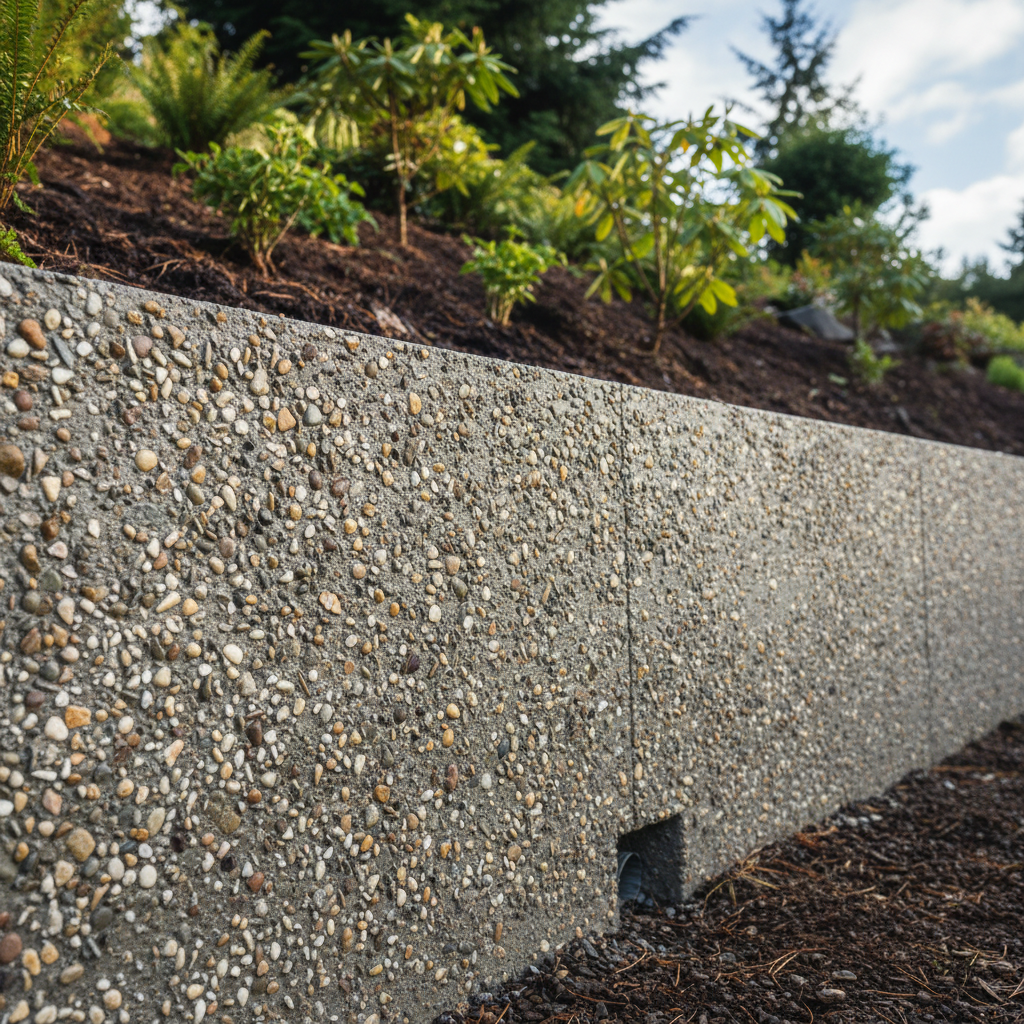
Alright, let's talk retaining walls. Specifically, concrete retaining walls. I get a lot of questions about these, and for good reason. They're not just big chunks of rock or concrete; they're critical structures that protect your property, manage drainage, and can even add a ton of curb appeal. Here in Bremerton, with our hilly terrain and often soggy soil, a well-built retaining wall isn't just a nice-to-have, it's often a necessity.
You've probably got some questions buzzing around in your head if you're considering one. I've heard 'em all, so let's dive into the most common ones I get asked.
What's the real difference between a segmental block wall and a poured concrete wall?
This is probably the first thing folks ask me. You see those interlocking block walls everywhere, right? They're called segmental retaining walls (SRWs). They're pretty popular because they can be quicker to install and sometimes a bit more forgiving with minor ground movement. They're built from individual concrete blocks stacked together, often with geogrid reinforcement woven in behind them for taller walls. They rely on their own weight and the interlocking system to hold the soil back.
Poured concrete walls, on the other hand, are a different beast. We build forms, pour wet concrete, and often reinforce it with rebar. Once it cures, you've got a monolithic, incredibly strong structure. These are generally stronger, can be built taller, and offer more design flexibility — you can get them smooth, textured, or even stamped. For heavy loads, really tall walls, or situations where you need maximum strength and durability, poured concrete is usually the way to go. It's a bigger upfront investment, but it's built to last for generations.
How important is drainage behind the wall, really?
Crucial. Absolutely, positively crucial. If you take one thing away from this, make it this: without proper drainage, your retaining wall is a ticking time bomb. Water builds up behind the wall, creating hydrostatic pressure. Think about it like a giant dam trying to hold back a lake. Eventually, that pressure can push the wall out, crack it, or even cause it to fail completely. And here in Bremerton, especially during our long, wet winters, we get a lot of water.
What we do is install a perforated drain pipe (often called a 'French drain') at the base of the wall, embedded in a layer of gravel. This collects the water and directs it away, usually to a daylight drain or a storm drain system. We also often use a drainage board or gravel directly behind the wall to allow water to filter down to that pipe. Don't ever skimp on drainage; it's the lifeblood of a healthy retaining wall.
Do I need a permit for a concrete retaining wall in Bremerton?
Most likely, yes. This isn't something you want to guess about. Generally, if your retaining wall is over 4 feet tall (measured from the bottom of the footing to the top of the wall, or sometimes from the grade on the low side), you'll definitely need a permit from the City of Bremerton or Kitsap County, depending on your exact location. Even for shorter walls, if they're supporting a structure, near a property line, or part of a larger landscaping project, a permit might be required. It's always best to check with the local planning department before you start any digging. They'll have specific requirements for engineering drawings and inspections. Trust me, getting caught without a permit is a headache you don't want.
What kind of maintenance do concrete retaining walls need?
That's one of the big advantages of concrete: it's pretty low maintenance. Once it's properly installed, you're mostly looking at keeping an eye on it. Check for any signs of cracking, bulging, or leaning. Make sure your drainage outlets aren't clogged with leaves or debris; that's probably the most common maintenance task. You might want to clean off any moss or algae that grows on it over time, especially on the shadier sides of walls here in the Pacific Northwest. A pressure washer can do the trick, but be careful not to blast too aggressively, especially on older or decorative finishes. If you notice anything concerning, like significant cracks or movement, give a professional a call. Don't wait for it to become a bigger problem.
How long do these walls typically last?
A properly designed and installed concrete retaining wall, especially a poured one, can last 50 to 100 years, or even longer. Seriously. We're talking about a structure that, when done right, is incredibly durable. The lifespan depends on a few factors: the quality of the concrete mix, the rebar reinforcement, the soil conditions, and, as I mentioned, that all-important drainage. Segmental block walls can also last a very long time, often 30-50 years, but their longevity can be more sensitive to ground movement and the quality of the backfill and compaction.
Can I build a garden bed right up against my retaining wall?
You can, but you need to be smart about it. If you're building a raised garden bed directly against the wall, you're essentially adding more soil and potentially more moisture right where you don't want it. If your wall wasn't designed to handle that extra load and moisture, you could be asking for trouble. It's usually best to maintain some distance, or at least ensure that the wall has a robust waterproofing membrane on the back and excellent drainage. If you plan on planting directly against it, choose plants that don't have aggressive root systems that could eventually compromise the wall's integrity. Think about how the water from your irrigation will affect the soil behind the wall too. It's all about managing that moisture.
What about the soil type in Bremerton? Does that affect wall design?
Absolutely it does. Bremerton, like much of Kitsap County, has a pretty varied geology. We've got areas with sandy, well-draining soil, but we also have plenty of places with heavy clay soils or glacial till. Clay, especially, can be a real headache. When it gets wet, it expands, and when it dries, it contracts. This constant movement can put a lot of stress on a retaining wall. It also doesn't drain well, which means more hydrostatic pressure if your drainage system isn't top-notch. For walls built in clay-heavy areas, we often need deeper footings, more robust reinforcement, and extra attention to backfill and drainage layers. We might even recommend a soil engineer's report for larger projects to make sure we're designing something that will stand up to the specific conditions on your property. That's where local experience, like what we've got at Oasis Concrete Co, really comes into play.
Look, retaining walls are serious business. They're not just a weekend DIY project if you want them to be safe and last. If you've got a slope or need to manage your yard's elevation, give us a call. We can walk you through the options and make sure you get a wall that's built right for your Bremerton home.