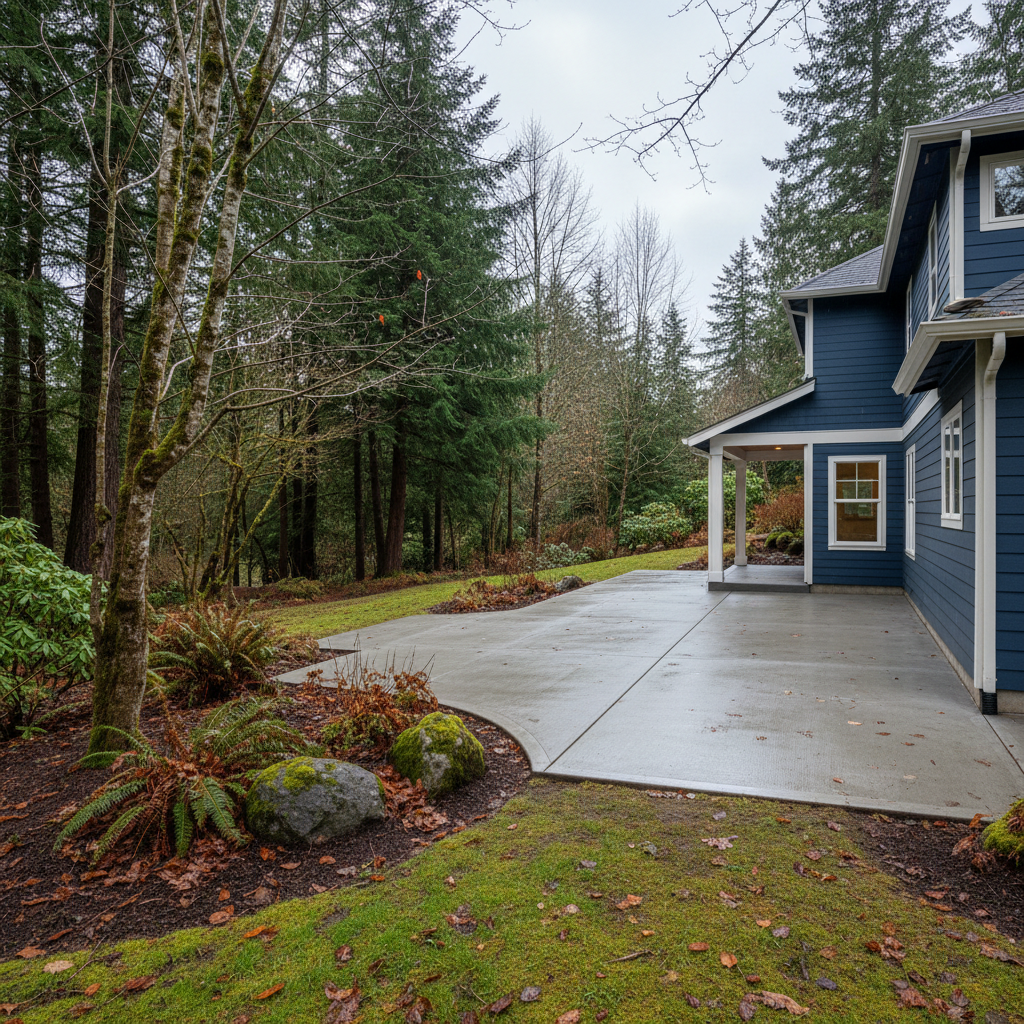
Concrete driveways around Kitsap County sometimes crack and pit after just a few winters while others hold up for 15 to 20 years or more. Homeowners living anywhere from Manette up toward East Bremerton already know the local weather does not do favors for masonry. Between the constant dampness rolling off the Sound and unexpected freeze-thaw snaps when cold wind comes down the valley, flatwork takes a heavy beating year-round. Oasis Concrete Co. has spent years pulling up busted slabs and pouring new ones across Bremerton, WA, and the secret to long-lasting concrete always comes down to timing and seasonal upkeep.
Timing your projects is the first step to a successful installation. People often call Oasis Concrete Co. in January wanting a brand-new patio poured. Our team has to tell them to wait. Concrete needs a stable curing environment, and pouring when temperatures hover near freezing or when the rain is coming down sideways ruins the chemical reaction required for concrete to gain strength. Here in Bremerton, WA, the sweet spot for major pours runs from late spring through early autumn. During July and August, we get warm, dry weeks where the mix cures evenly. That said, if it gets too hot, our team has to move quickly because the mix sets too fast and can craze the surface. Spring and early fall are ideal, as long as we keep an eye on sudden overnight drops in temperature.
Once your slab is in the ground, protecting your concrete shifts to a seasonal routine. Spring is all about cleanup. Winter moss and fir needles hold moisture against the surface, which accelerates scaling. Grab a stiff broom and a hose—or a pressure washer turned down to a sensible PSI—and clear away the organic debris that piled up during the rainy months. Do not go blasting away at the cement paste on top of your concrete, though. Oasis Concrete Co. sees many homeowners strip the surface clean off because they rented a commercial-grade washer and held the nozzle three inches from the ground.
Summer brings sealing season. People ask Oasis Concrete Co. if they need to seal their concrete every single year. Usually, the answer is no. But if you drop water on your driveway and it soaks right in instead of beading up, it is time for a fresh coat of sealer. A good penetrating sealer acts like a raincoat for your concrete, stopping moisture from seeping into the microscopic pores. When winter rolls back around and that trapped water turns to ice, it expands with enough force to pop chunks right out of your driveway or walkway. Taking a Saturday in July to clean and seal your flatwork saves you hundreds of dollars in premature replacement costs down the road.
Fall is when you need to prep for the freeze. Clear out your expansion joints if the old caulking or backer rod has degraded. If leaves and dirt fill those gaps, they trap standing water right against the edges of the slabs, leading to spalling along the borders when the temperature plunges in January. Oasis Concrete Co. builds these joints to handle normal shifting, but they still need basic homeowner maintenance to keep water out of the sub-base.
Winter is mostly about damage control and avoiding bad habits. Skip the cheap rock salt if you can. Sodium chloride and other harsh de-icers can pit the surface and wreck the finish, especially on newer concrete that has not fully matured. Use sand for traction instead, or look for calcium magnesium acetate if you really need to melt ice off your front steps. A little bit of proactive care through the changing seasons goes a long way toward keeping your concrete solid, safe, and looking sharp for many years in the Bremerton climate.