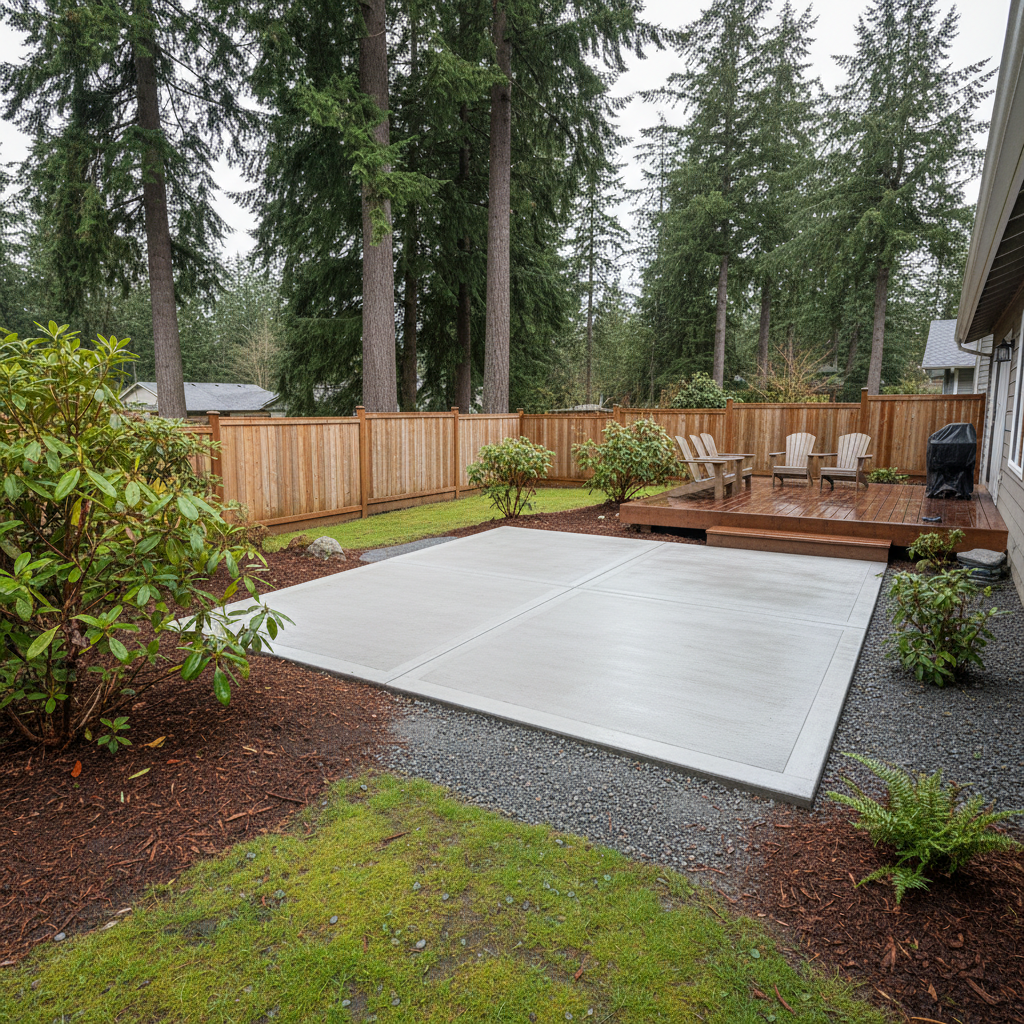
Pouring concrete while a typical Kitsap County mist turns into a full-blown downpour brings unique challenges. Timing matters around here because the weather in Bremerton keeps things green, but it can throw off flatwork if you do not plan ahead.
We get plenty of moisture year-round. That constant dampness changes how concrete cures, how the subgrade behaves, and when we can actually get a project scheduled without tarping everything in sight.
Why Bremerton Climate Dictates Your Schedule
Concrete does not dry—it cures through a chemical reaction. Water is vital for that process, but too much external water too fast ruins the surface cream and weakens the whole slab. When you are dealing with winter temperatures hovering in the 40s and relentless rain rolling off the Olympics, pouring concrete outside becomes a gamble.
Spring and summer are prime time for concrete work around here. Once the ground dries out from the winter saturation and we get consistent daytime highs in the 60s and 70s, conditions are ideal. The mix sets predictably, and we can get a proper finish on your driveway or patio before any surprise showers roll in.
The Trouble with Local Soils
Down by Manette or up near Retsil, you will find everything from sandy loam to heavy clay. Clay retains water. When that water freezes and thaws during our sporadic winter cold snaps, it shifts. If a subgrade is not prepped right with crushed rock and compacted tightly, your new slab is going to crack when the earth moves.
Oasis Concrete Co spends a lot of time on base prep because skipping it in Kitsap soil is a recipe for disaster. Oasis Concrete Co digs out the weak stuff, brings in good aggregate, and tamps it down solid for your Concrete Contractor project.
Protecting Your Investment Through the Seasons
Once your concrete is cured, you are not completely off the hook. Bremerton weather demands a little maintenance to keep things looking sharp.
- Seal your concrete every few years to keep moisture from penetrating the pores and freezing.
- Keep organic debris like pine needles and wet leaves cleared off your patio so they do not stain the surface.
- Avoid using harsh de-icing salts in the winter, which pit and spall the concrete. Use sand for traction instead.
If you are thinking about tackling a new project this season, give us a call at Oasis Concrete Co. Oasis Concrete Co will look at your site, talk about the timeline, and make sure your next slab stands up to the Pacific Northwest elements for 15 to 20 years or more.