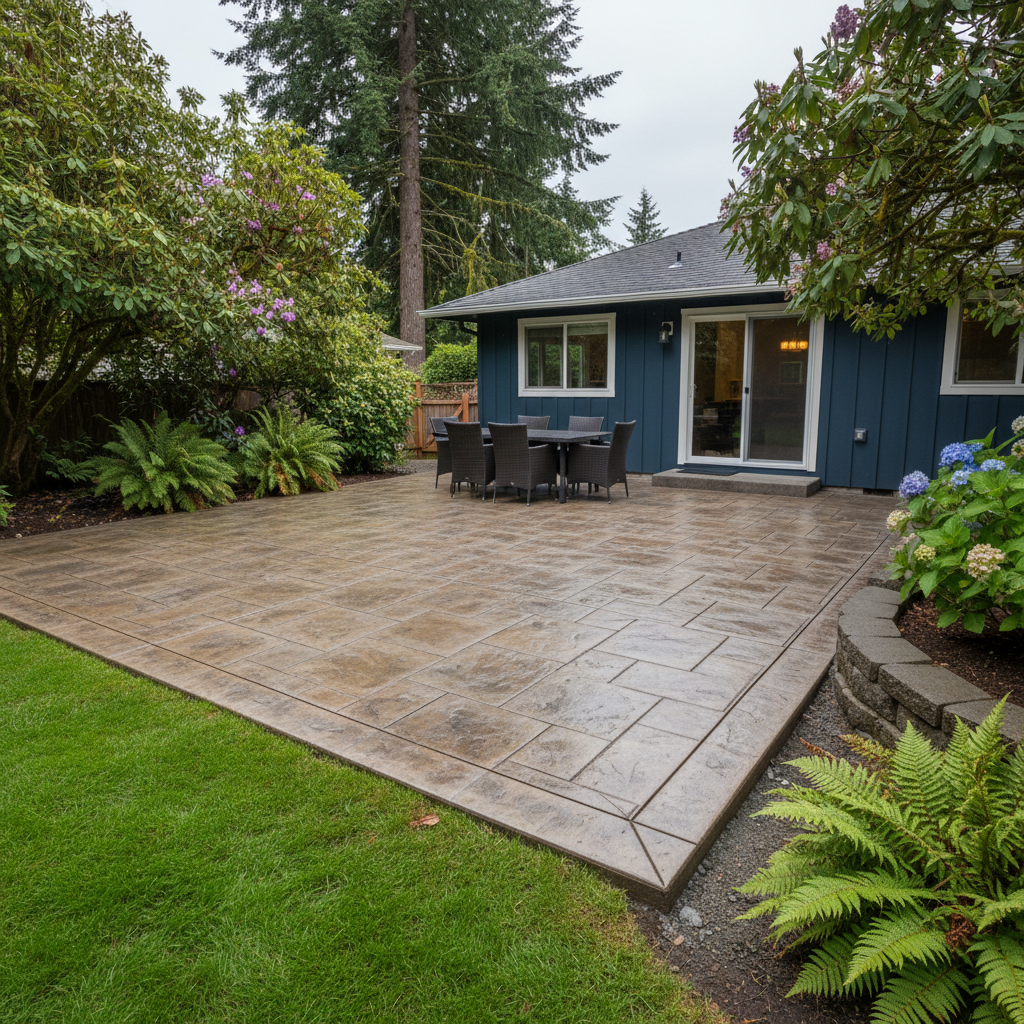
Alright, let's talk about concrete patios. Everyone loves a good outdoor space, don't they? Especially here in Bremerton, where we get those beautiful sunny days mixed with plenty of rain. A solid concrete patio can totally transform your backyard. But I've seen folks mess these projects up more times than I can count, and it usually comes down to a few common mistakes. You definitely don't want to be one of them.
Ignoring the Groundwork (Literally)
This is probably the biggest one. People get all excited about the finished look, but they forget what's underneath. You just can't pour concrete on whatever's already there. Here in Bremerton, especially closer to the water or in those older neighborhoods with mixed fill, you absolutely have to deal with proper subgrade preparation. If your base isn't compacted right, or if you've got organic material left in there, that concrete's going to crack. It's not a matter of if, but when. We're talking about settlement, uneven surfaces, and a whole lot of regret. A good contractor will spend time on this, making sure the ground is stable, properly graded for drainage, and has a solid gravel base. If they're rushing this step or trying to cut corners, that's a huge red flag, wouldn't you say?
Skimping on Drainage
We live in the Pacific Northwest. It rains. A lot. So, why would anyone design a patio that doesn't drain properly? I've seen patios pitched right towards the house, or with no pitch at all, turning into a giant puddle. That's not just annoying; it can lead to water issues against your foundation, which is a whole other headache you really don't want. Your patio needs a slight slope, usually about 1/8 to 1/4 inch per foot, directing water away from your home and towards a proper drainage area. Sometimes that means adding a channel drain or making sure the landscaping around it can handle the runoff. Don't let anyone tell you it's not important. It absolutely is.
Not Thinking About Expansion and Control Joints
Concrete expands and contracts with temperature changes. It's just what it does. If you don't give it places to do that predictably, it's going to crack wherever it wants, and usually in the most visible spot. Expansion joints (full depth separations) and control joints (saw cuts or grooved lines) are there for a reason. They guide those cracks. Some homeowners think they look ugly, or a contractor might skip them to save a few bucks or because they're inexperienced. Big mistake. You'll end up with random, ugly cracks that are much worse than a few neat lines. Any reputable concrete crew, like us at Oasis Concrete Co, knows how crucial these are for the longevity and appearance of your patio.
Choosing the Wrong Finish for Our Climate
There are so many cool finishes for concrete patios these days – stamped, exposed aggregate, broom finish, smooth trowel. They all look great in pictures. But some are just better suited for our Bremerton weather than others. A super smooth, high-gloss finish might look sleek, but it can get incredibly slippery when it's wet, which is most of the year. You want something with a bit of texture for traction. A broom finish is classic and reliable. Exposed aggregate gives you a nice grip and looks fantastic. Stamped concrete can be great too, but make sure it's sealed properly and regularly to protect it from moss and algae growth, which thrives in our damp environment.
Hiring the Cheapest Bid
Look, I get it. Money matters. But when it comes to concrete, the cheapest bid is almost never the best bid. Concrete work is an investment. It's not something you want to do twice. The lowest price often means they're cutting corners on materials, labor, or proper preparation. They might not be insured, or they might not have the experience to handle unexpected issues, like hitting a water line or dealing with unstable soil. Ask for references, check their reviews, and make sure they're licensed and insured. A good contractor will be transparent about their process, their materials, and their pricing. If a bid seems too good to be true, it probably is.
You're putting a permanent structure in your yard. Take the time to plan it right, ask the tough questions, and choose someone who knows what they're doing. You'll be enjoying your patio for years to come instead of staring at cracks and puddles.