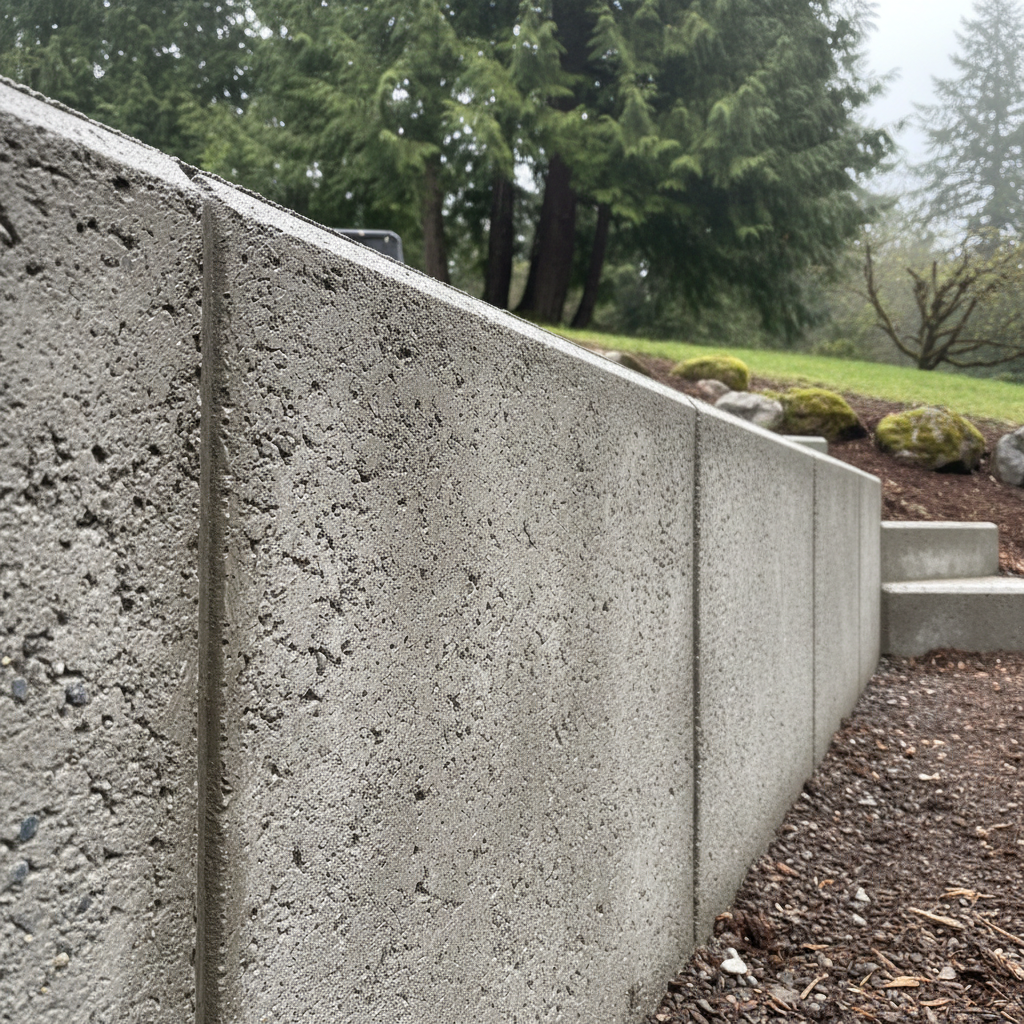
Thinking About a Concrete Retaining Wall?
So, you've got a slope in your yard, maybe some erosion issues, or you just want to create some usable, level space. A concrete retaining wall is often the best solution for that. It's strong, durable, and when done right, it looks fantastic. But before you grab a shovel, let's talk about what's involved and what you can realistically do yourself versus when you absolutely need to call in a pro.
I've seen a lot of retaining walls around Bremerton, from the small decorative ones in front yards in Manette to the serious structural walls holding back hillsides in areas like Olympic View. The key to a successful wall, no matter the size, is understanding the forces it's up against.
What a Retaining Wall Does (and Why It Matters)
Simply put, a retaining wall holds back soil. That might sound easy, but soil is heavy, especially when it's saturated with our Kitsap County rain. Water adds immense pressure, and if a wall isn't built to handle it, it's going to fail. And a failed retaining wall isn't just an eyesore; it can be a dangerous, expensive mess.
You're dealing with lateral earth pressure, hydrostatic pressure (from water), and sometimes even surcharges (like a driveway or building sitting on top of the soil behind the wall). That's why proper design and construction are non-negotiable.
DIY Retaining Walls: When It's Possible
For smaller projects, you might be able to tackle a concrete retaining wall yourself. I'm talking about walls that are generally under 2-3 feet tall, holding back a relatively flat area, and not supporting anything critical above them. These are often more for landscaping or creating a raised garden bed.
Here's what you'd need to do:
- Plan and Dig: You'll need to dig a trench for the footing that's wider than your wall and extends below the frost line (which is usually around 18-24 inches deep here in Bremerton). Make sure the base is level and compacted.
- Formwork: Build sturdy forms out of plywood or lumber for your footing and then for the wall itself. They need to be braced well so they don't bow out when you pour the concrete.
- Reinforcement: Even small concrete walls need rebar. It gives the concrete tensile strength, preventing cracks. You'll need to place rebar in the footing and vertically into the wall.
- Pouring and Curing: Mix and pour your concrete. For small jobs, you might rent a mixer or order ready-mix if you have enough access. Proper curing is crucial – keep the concrete moist for at least 7 days.
- Drainage: This is huge. You need a way for water to escape from behind the wall. A layer of gravel and a perforated drain pipe (a 'French drain') behind the wall, leading to an outlet, is essential. Without it, water builds up, and your wall will eventually push out.
If you're comfortable with carpentry, digging, and heavy lifting, and you're meticulous about following instructions, a small wall is doable. Just remember, it's a lot of work, and concrete doesn't wait for you to fix mistakes.
When to Absolutely Call a Pro (Like Oasis Concrete Co.)
Look, I'm all for homeowners doing what they can. But there are definite red flags that scream,