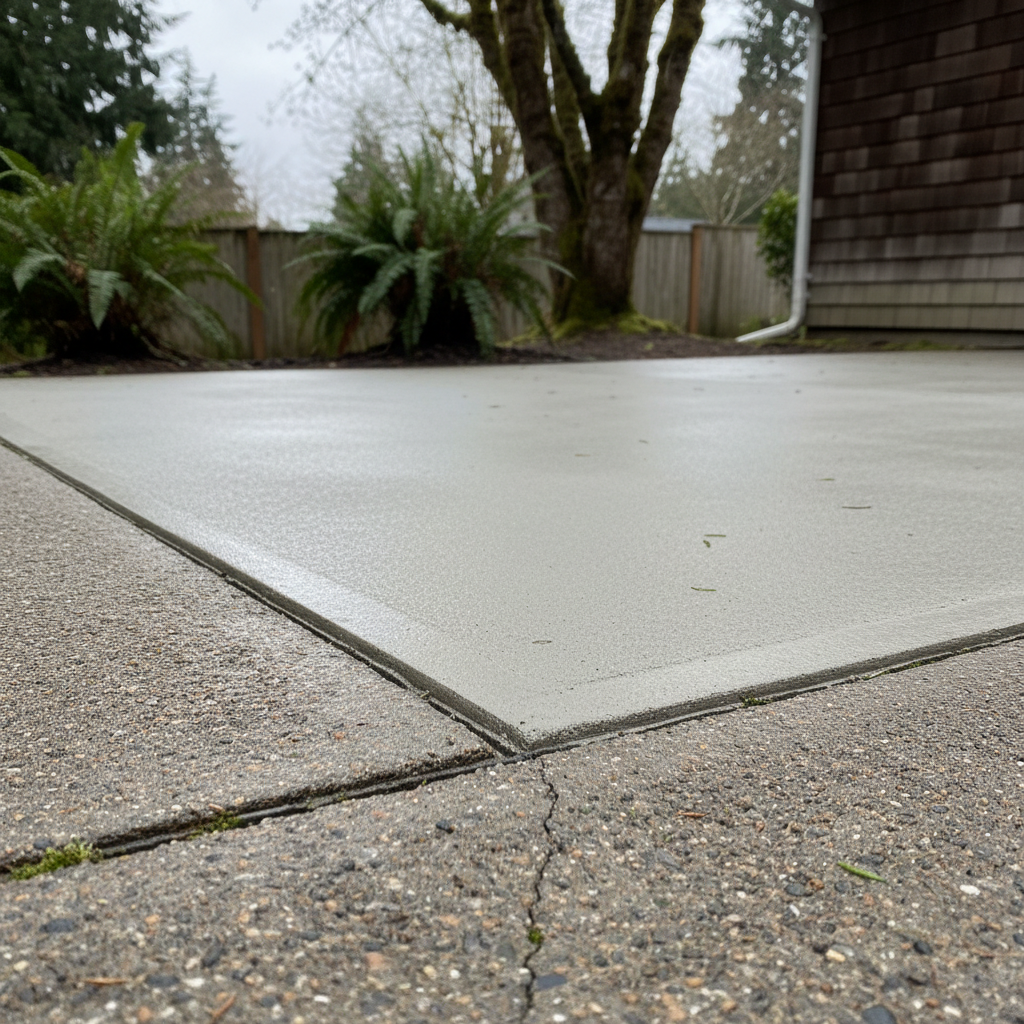
That crack in your concrete slab isn't just an eyesore, it's a sign. And depending on what kind of crack it is, it could be telling you a few different things. As a concrete contractor right here in Bremerton, I see all sorts of concrete issues, from minor surface flaws to major structural headaches. So, let's break down what you can probably tackle yourself and when you really need to pick up the phone.
Before You Grab the Caulk Gun: Assess the Damage
First things first, take a good look. Is it a hairline crack, barely noticeable? Or is it wide enough to trip over, with one side higher than the other? This initial assessment is crucial.
- Hairline Cracks: These are usually just surface-level. They happen from normal concrete shrinkage as it cures, or from minor temperature fluctuations. Think of them like fine lines on an old map. You can often handle these yourself.
- Spiderweb Cracks (Craze Cracks): These are also surface-level, a network of tiny, shallow cracks. They're typically cosmetic and happen when the surface dries too quickly. Again, usually a DIY fix.
- Wide Cracks (1/4 inch or more): Now we're getting into more serious territory. If it's wide, deep, or if the concrete has shifted, that's a red flag. This could indicate a problem with the subgrade (the dirt underneath) or even a structural issue.
- Slab Settlement/Heaving: If one section of your driveway or patio is noticeably higher or lower than another, or if there's a significant dip, that's definitely not a DIY job. This often points to soil instability, which we see a fair bit of around here with our clay-heavy soils and the constant rain we get.
If you're dealing with anything more than a hairline or spiderweb crack, or if there's any noticeable shifting, you're likely looking at a professional repair. Don't try to patch over a structural problem; it's a temporary fix that'll cost you more in the long run.
DIY Concrete Repair: What You Can Do
For those smaller, cosmetic cracks, you can absolutely do some good work yourself. Here's the basic rundown:
1. Clean it out: Use a wire brush, screwdriver, or even a shop vac to get all the loose debris, dirt, and old caulk out of the crack. It needs to be clean and dry for any patch material to stick.
2. Choose your material:
- Concrete Caulk/Sealant: For hairline to 1/4-inch cracks. Look for a polyurethane-based sealant. It's flexible, which is good for our temperature swings, and it'll keep water out.
- Vinyl Concrete Patch: For wider, shallower cracks or spalled (flaked) areas. You mix this with water, and it's good for filling larger voids.
3. Apply it: Follow the product instructions carefully. For caulk, cut the tip to match the crack width and apply a continuous bead. Smooth it with a wet finger or trowel. For patch, trowel it into the crack, making sure it's packed in tight and flush with the surrounding concrete. You want a good, tight bond.
4. Cure it: This is important. Keep the patched area damp for a few days, especially if you used a patch mix. Covering it with plastic or misting it regularly helps the patch cure strong and prevents it from drying out too fast and cracking again.
Remember, these DIY fixes are for preventing water intrusion and improving appearance. They won't fix underlying structural problems.
When to Call Oasis Concrete Co (or Another Pro)
You've assessed the situation, and it's more than just a surface scratch. Here's when you absolutely need a professional:
- Wide, Deep, or Shifting Cracks: As I mentioned, these often point to issues with the subgrade. A pro can diagnose the cause and recommend the right solution, whether it's mudjacking (also called slab jacking or concrete lifting) to stabilize and lift sunken slabs, or a full replacement if the damage is too severe.
- Extensive Spalling or Pitting: If large areas of your concrete are flaking off or have deep pits, it might be beyond a simple patch. This could be due to poor original installation, freeze-thaw cycles, or de-icing salts.
- Drainage Issues: Sometimes, concrete cracks because water isn't draining away properly, eroding the soil beneath. A pro can assess your site's drainage and suggest solutions that prevent future problems. We often see this in older Bremerton homes where the original grading wasn't quite right.
- Structural Concerns: If a crack is in a foundation, a load-bearing slab, or if you're seeing cracks in your interior walls correlating with exterior concrete issues, don't mess around. Get a structural engineer or an experienced concrete contractor involved immediately.
A good contractor, like us at Oasis Concrete Co, won't just slap a band-aid on it. We'll figure out why the concrete failed and propose a lasting solution. Sometimes that means a repair, other times it means a partial or full replacement. It's about protecting your investment and ensuring safety.
Don't let those small cracks turn into big problems. Take a good look, and if you're unsure, it never hurts to get a professional opinion. We're here to help you keep your concrete solid and safe.