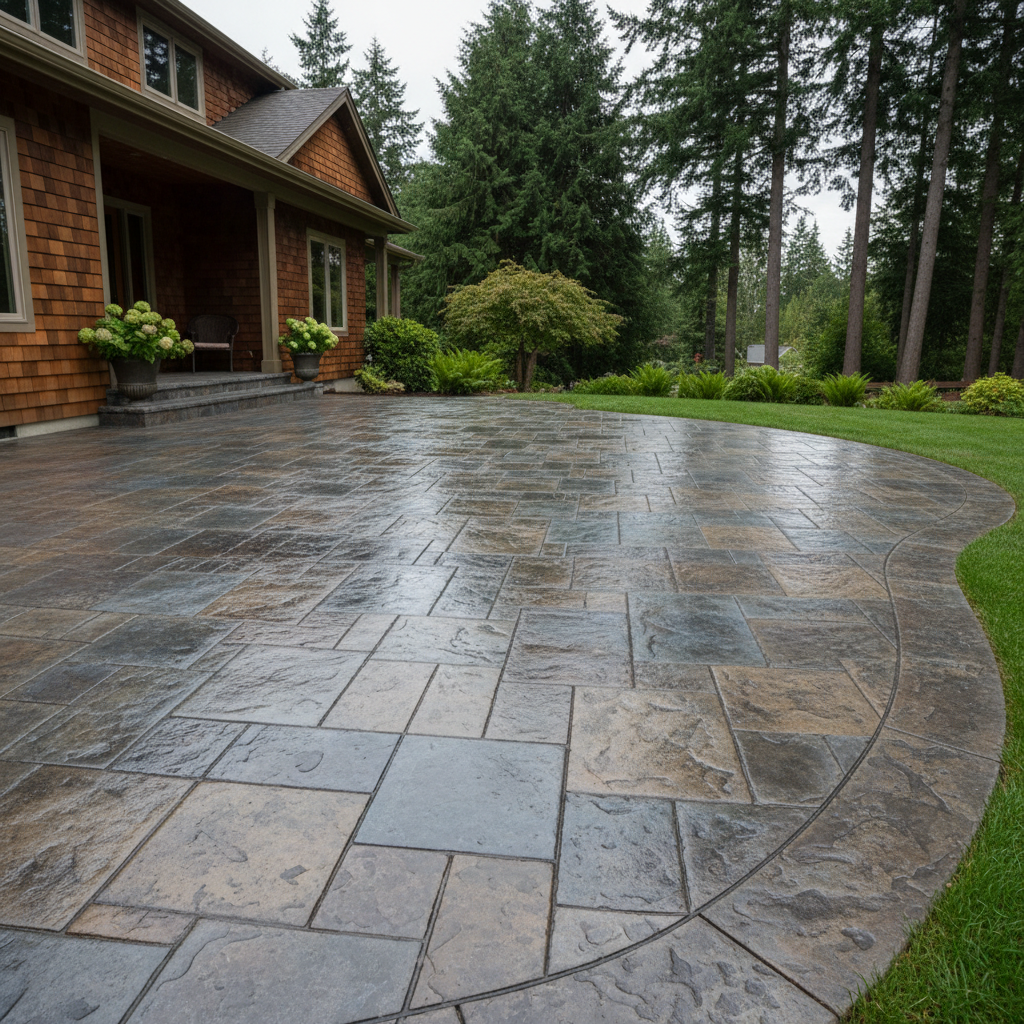
You've invested in stamped concrete, whether it's a patio, walkway, or driveway. It looks fantastic, right? That textured, often colored surface really adds a custom touch to your home. But here's the thing: it's not a 'set it and forget it' kind of deal, especially not here in Bremerton.
Our climate, with its wet winters and sometimes surprisingly warm, dry summers, can be tough on outdoor surfaces. Proper maintenance isn't just about keeping it pretty; it's about protecting your investment and making sure it lasts. I've seen plenty of stamped concrete jobs around town, some that hold up beautifully for decades, and others that start looking rough way too soon. The difference? Usually, it's how well they've been cared for.
Extending the Life of Your Stamped Concrete
The biggest thing you can do to extend the life of your stamped concrete is to keep it sealed. Think of the sealer as the clear coat on your car; it protects the color and the surface from wear and tear, UV rays, and moisture penetration. Most stamped concrete comes sealed when it's installed, but that sealer isn't permanent.
You'll want to reseal it every 2-3 years, sometimes more often if it's a high-traffic area or gets a lot of direct sun. How do you know it's time? Pour a little water on it. If the water beads up nicely, you're probably good. If it soaks in and darkens the concrete, it's definitely time for a new coat. Before resealing, you need to clean it thoroughly. A good power wash (but not too high pressure, you don't want to damage the surface) with a mild detergent is usually enough. Make sure it's completely dry before applying the new sealer.
Another key is to avoid harsh chemicals. Things like de-icers with ammonium sulfate or rock salt can really eat away at the sealer and even the concrete itself, especially during those frosty mornings we get near the Puget Sound. Use sand for traction if you need it, or a concrete-safe de-icer.
Regular Maintenance: What It Looks Like
Daily or weekly maintenance for stamped concrete is pretty simple. Just sweep it off regularly to remove dirt, leaves, and other debris. This prevents grime from building up and potentially staining the surface, especially if it gets wet and sits there for a while.
Monthly or quarterly, depending on how dirty it gets, give it a good rinse with a garden hose. If you notice any stubborn spots, a little dish soap and a soft brush can usually take care of it. For oil or grease stains, you'll need something stronger. There are specific concrete degreasers out there that work well, but always test them in an inconspicuous spot first to make sure they don't affect the color or sealer.
One thing I always tell folks around here, especially if their stamped concrete is under trees, is to watch out for moss and mildew. Our damp climate is perfect for it. A simple solution of water and bleach (about 1 part bleach to 3 parts water) or a commercial moss killer can do the trick. Just make sure to rinse it thoroughly afterward so it doesn't harm nearby plants.
Warning Signs of Problems
Keep an eye out for these things:
- Fading Color: If your stamped concrete is losing its vibrant color, that's a pretty clear sign the sealer is breaking down and UV rays are getting to the pigment. It's not just cosmetic; it means the concrete itself is becoming more vulnerable.
- Flaking or Peeling Sealer: This looks exactly like it sounds. Bits of the top layer peeling off. This usually happens when the sealer wasn't applied correctly, or it's just worn out. You'll need to strip the old sealer and reapply.
- Pitting or Spalling: These are small holes or larger flakes of concrete coming off the surface. This can be caused by freeze-thaw cycles if water gets into the concrete, or by using harsh de-icers. It's a more serious issue and often means the concrete itself is starting to degrade.
- Cracks: While small hairline cracks can be normal with any concrete, larger, spreading cracks are a red flag. They can indicate soil movement, improper installation, or significant wear.
When to Call a Professional
While a lot of maintenance is DIY-friendly, there are times you really should call in the pros. If you're seeing significant pitting, spalling, or large cracks, that's beyond a simple reseal. These issues often require repairs that involve specialized products and techniques to match the existing stamped pattern and color.
Also, if you're unsure about stripping old sealer or applying a new coat, especially on a large area, it's better to get help. An improperly applied sealer can look patchy, cloudy, or even peel prematurely, which means more work down the road. We at Oasis Concrete Co. handle these kinds of repairs and re-sealing jobs all the time. We can assess the damage, recommend the best course of action, and make sure your stamped concrete looks great and stays protected for years to come.
Don't wait until a small problem becomes a big, expensive one. A little proactive care goes a long way in keeping your stamped concrete looking as good as the day it was poured.
襖``````json {